
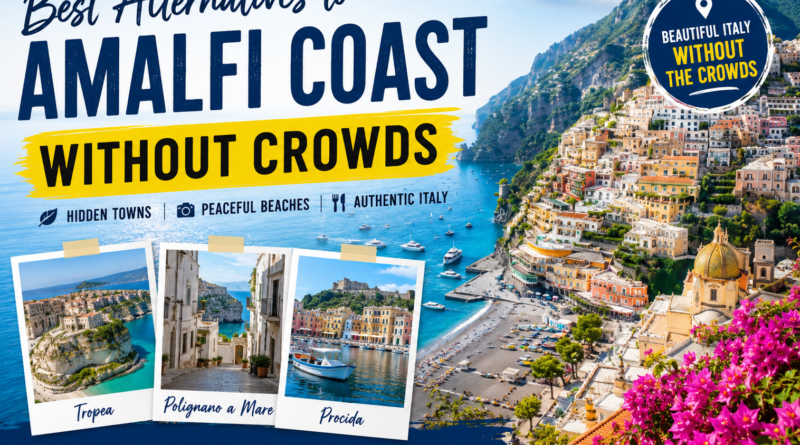
Best Alternatives to the Amalfi Coast Without Crowds (Italy Tour Guide)
If you love the idea of the Amalfi Coast but hate the thought of traffic jams, overpriced spritzes, and beach clubs crammed shoulder‑to‑shoulder, you’re not alone. This guide is for travelers who want that sun‑drenched Mediterranean feeling—sea cliffs, pastel towns, long dinners—without the chaos.
Below, you’ll find crowd‑lighter alternatives that deliver beauty, atmosphere, and better value, plus practical tips to help you actually enjoy your coastal holiday.
What Is the Best Alternative to the Amalfi Coast?
The best alternatives to the Amalfi Coast are lesser‑known Italian coastal regions and islands that offer similar scenic views, good food, and charm with fewer tourists and better prices. Places like Costa Viola in Calabria, Salento in Puglia, Monte Argentario in Tuscany, and Ponza off the Lazio coast give you dramatic coastal scenery and authentic local life-but without the constant gridlock and selfie crowds.
Why Many Travelers Are Skipping Amalfi (For Now)
Is the Amalfi Coast Overcrowded?
In peak season, yes—painfully so. Buses creep along hairpin roads, queues snake through tiny towns, and beach clubs book out weeks in advance. For many people, that kills the romantic fantasy. Instead of slow mornings and spontaneous swims, you’re stuck in logistics mode: reservations, transfers, waiting in lines.
There’s also the cost factor. Because Amalfi is so globally famous, you pay a premium for almost everything: rooms, cocktails, sunbeds, even basic meals. If you’re an adult traveler spending hard‑earned vacation time, you’re right to ask: “Is there somewhere else I can go that feels just as special, but less insane?”
The good news: yes, there is.
What Makes a Great Amalfi Coast Alternative?
Before we talk destinations, it helps to define what we’re actually trying to replace. An Amalfi “alternative” isn’t just any beach. It should tick most of these boxes:
- Scenic drama
Cliffs, headlands, hilltop or terraced towns, and those cinematic sea views. - Human scale
Places where you can walk around, stumble into side streets, and feel a sense of local life rather than a packaged tourist machine. - Good food and wine
Simple seafood, local wine, gelato, bakeries—without feeling like a tourist trap on every corner. - Fewer crowds
You’ll still see visitors, but you can actually find a table, a sunbed, and a parking spot in reasonable time. - Better value
Prices that feel fair rather than inflated just because the name is trending on Instagram.
The destinations below hit most of these criteria. None of them are “secret”-nothing in the age of social media truly is—but they’re dramatically calmer and more livable than the classic Amalfi hot spots.
Quick Overview: Which Coast Is Right for You?
Here’s a fast “at a glance” guide before we dive in:
| Situation / Travel Style | Best Alternatives to Consider |
| Romantic escape, slow days | Costa Viola, Monte Argentario, Ponza |
| Beach‑hopping + nightlife | Salento (Puglia), Ligurian Coast around Genoa |
| Long, relaxed summer base | Salento, Costa Viola, quieter Ligurian villages |
| Short break from Rome/Florence | Monte Argentario, Ponza, Ligurian Coast |
| Culture + atmosphere over beaches | Matera combined with a nearby coastline |
Use this as a cheat sheet: pick the row that sounds most like you, then skip straight to that destination’s section.
1. Costa Viola & Scilla, Calabria: Violet Sunsets and Zero Pretense
Why Costa Viola Feels Like Amalfi Without the Hype
Costa Viola (“Violet Coast”) in Calabria sits on the Tyrrhenian Sea, looking out toward Sicily. Think steep, green hills dropping into deep blue water, fishing villages tucked around rocky bays, and sunsets that give the coast its name—violet, copper, and gold at once.
Scilla, the star of this stretch, is a pastel village built around a fortress‑topped promontory. The Chianalea district is especially atmospheric: fishermen’s houses perched right above the water, tiny alleyways, tables set nearly at sea level. It has that movie‑set feel people chase in Amalfi, but you’re surrounded mainly by Italian families and Calabrian locals, not global tour groups.
What Makes It Better Than Amalfi (Right Now)
- Fewer international tourists and more domestic Italian visitors
- Prices for food, drinks, and rooms that are far more down‑to‑earth
- A slower, less performative vibe—less about posing, more about enjoying the sea
You still get the drama: narrow, atmospheric lanes, sea‑spray on your face, crashing waves under restaurant terraces. But you can actually hear the water instead of constant traffic.
Who Will Love Costa Viola
- Couples who want romance without pressure or dress codes
- Travelers who care more about sea and scenery than luxury amenities
- Food‑lovers keen to try southern Italian seafood-swordfish, anchovies, octopus-prepared simply
Practical Tips for Visiting
- Getting there: Reggio Calabria and Lamezia Terme are the usual gateways; from there, take a regional train to Scilla or rent a car.
- Best time to go: Late May–June and September–early October. In August, Italians vacation here, so expect more people but still nothing like Amalfi’s intensity.
- How long to stay: 3–5 days works well, especially if you combine Costa Viola with a couple of days in Reggio Calabria or a hop to Sicily.
2. Salento, Puglia: Two Seas, Endless Swim Spots
Why Salento Feels Like an Easier, Freer Amalfi
Salento is the southern tip of Puglia-the “heel” of Italy’s boot-surrounded by both the Adriatic and Ionian Seas. Instead of one sheer cliff coastline, you get a long, varied shore line: sandy beaches, rocky coves, turquoise inlets, and cliff‑jumping spots. Inland, towns like Lecce, Otranto, and Gallipoli bring a mix of history, nightlife, and that lazily glamorous southern vibe.
If Amalfi feels like a single, crowded stage, Salento feels like a big, open festival ground: you can move around, find your corner, change scenes whenever you want. The scenery might not always be as vertically dramatic as Amalfi, but the overall experience—sun, water, food, and late dinners-is just as satisfying and often more fun.
Why Salento Is a Smart Move for Adult Travelers
- More space
The coastline is stretched out, so people are naturally dispersed across many beaches and towns. You can always find a less busy spot if you’re willing to drive a little. - Better value
Accommodation and dining typically cost less than the Amalfi Coast, especially outside August. You can still splurge, but you don’t have to just to get something decent. - Flexible vibes
You want calm? Stay in or near Otranto. You want more buzz and nightlife? Try Gallipoli or coastal areas near Lecce. You can make the trip as quiet or as social as you like.
Who Will Love Salento
- Groups of friends who want beach days plus bars and music at night
- Couples who love road trips and discovering beach after beach
- Anyone into long lunches, simple seafood, and late‑night passeggiata (evening strolls)
Practical Tips for Visiting
- Getting there: Fly into Bari or Brindisi, rent a car, and drive down. Public transport exists but having a car gives you 10x more freedom to find quieter swim spots.
- Best base towns: Lecce for culture and central access; Otranto for a more romantic coastal setting; Gallipoli for a livelier scene.
- Best time to go: June, early July, and September are ideal. August is fun but busy; it’s Italian holiday season.
3. Monte Argentario, Tuscany: Under‑The‑Radar Tuscan Riviera
Why Monte Argentario Feels Like a Secret Amalfi
Monte Argentario is a hilly peninsula on the southern Tuscan coast, connected to the mainland by thin strips of land and lagoons. It has dramatic cliffs, pine‑fringed roads, tiny beaches tucked into coves, and pretty harbor towns like Porto Santo Stefano and Porto Ercole.
Here, you can drive narrow coastal roads with constant sea views, stop at scattered viewpoints, and hop down to small beaches. It’s the kind of place you’d expect to be overrun-but somehow, the crowd level is still very manageable compared to the big names.
Why It’s a Strong Alternative
- Easy access from major cities
It’s reachable from Rome or Florence in a few hours by car or train + bus, making it ideal for a long weekend or the coastal leg of a bigger Italy trip. - Less international hype
Italians know it well, but it hasn’t become a global social media poster child yet. That keeps prices and crowds somewhat in check. - Balanced energy
You get small marinas, chic but not over‑the‑top bars, and quiet corners all in one compact area.
Who Will Love Monte Argentario
- Couples looking for a romantic but not flashy weekend
- Travelers who like combining sea time with a bit of Tuscan countryside
- People who value scenic drives and viewpoints as much as beach lounging
Practical Tips for Visiting
- Getting there: From Rome or Florence, head toward Orbetello by train or car; from Orbetello, Argentario is very close by.
- Best time to go: Late May, June, and September. July and August are busier but still less manic than Amalfi at its peak.
- How long to stay: 2-4 nights works nicely, especially when paired with a Tuscan inland stay.
4. Ponza: The Low‑Key Island Getaway
Why Ponza Has That Amalfi‑Adjacent Magic
Ponza is a small island off the Lazio coast, reachable by ferry from ports near Rome. Its main town is a graceful curve of pastel buildings facing the harbor, with steep lanes and staircases climbing the hillside. Boat trips circle around cliffs, caves, and natural rock pools, with plenty of swimming stops in clear water.
Imagine the Amalfi Coast compressed into one island, but with more of a “casual holiday” spirit than a full‑blown luxury scene. That’s Ponza.
Why Ponza Can Beat Amalfi for Adults
- Boat‑centric days
The best thing to do is rent a small boat or join a local excursion—no complicated schedules, just cruising and swimming. - Fewer big tour groups
You’ll see tourists, of course, but fewer giant buses or cruise excursions, which changes the entire pace of the place. - Simple, enjoyable nights
Aperitivo by the harbor, seafood dinners, strolling along the waterfront. It feels “adult” without being stiff or overly curated.
Who Will Love Ponza
- Couples and friends who love time on the water
- People who prefer one base rather than packing and unpacking every two nights
- Travelers who don’t care about big museums or sightseeing checklists
Practical Tips for Visiting
- Getting there: Ferries run from ports like Anzio or Formia (check seasonal schedules). Plan your arrival and departure carefully to match boat timetables.
- Best time to visit: Late May–June and September are perfect; July is warm and lively; August is peak.
- How long to stay: 3–5 nights lets you do boat days, chilled days in town, and at least one lazy “just read and swim” day.
5. Ligurian Coast Around Genoa: Urban Base, Coastal Escapes
Why the Ligurian Coast Feels Familiar-but Calmer
If you look at pictures of hillside Ligurian towns—colorful houses, stacked up above the sea-you’ll see why people compare it to Amalfi and Cinque Terre. The difference is that if you base yourself in or near Genoa, you get:
- A real working city with history, markets, and neighborhoods
- Easy day‑trip access to smaller coastal towns by train or boat
- More diverse and generally more affordable accommodation options than the most hyped resort towns
Instead of being locked into a single, crowded Amalfi village, you have a flexible base and several under‑the‑radar villages within reach.
Who Will Love This Area
- Travelers who like a mix of city life and seaside escapes
- Food‑obsessed visitors (this is pesto country; the focaccia alone is worth the trip)
- People who want options: museums one day, quiet bay the next
Practical Tips for Visiting
- Getting there: Fly or train into Genoa. From there, trains and ferries connect to various coastal towns.
- Best time to go: May–June and September–October gives you good weather without peak crowds.
- How long to stay: 4-7 nights if you’re using it as a hub for multiple coastal day trips.
6. Matera (Plus Coast): Not a Beach, But an Unforgettable Pairing
Why Matera Belongs in This Conversation
Matera is inland, so it’s not a direct Amalfi substitute-but it’s one of the most atmospheric places you can visit in southern Italy. The old town is a maze of cave dwellings (the famed “Sassi”), carved into hills and ravines. At night, when the stone glows under warm lights, it feels like a film set.
As an alternative trip idea, think of it like this: instead of spending all your time on one crowded coast, split your trip between an inland show‑stopper like Matera and a quieter coastal area (Salento, Basilicata’s coast, or parts of Calabria). You end up with more variety and less stress.
Who Will Love Matera
- Couples who value atmosphere over beach life
- Photographers and history lovers
- Travelers who enjoy walking, getting lost in old quarters, and slow evenings
Practical Tips for Visiting
- Getting there: It’s reachable by train or bus from Bari; from Matera, you can head on to Puglia or Basilicata’s coast by car.
- How long to stay: 2–3 nights is usually enough if you pair it with a coastal stay.
How to Choose the Right Amalfi Alternative for You
If you’re torn between options, try this quick decision guide:
- You want romance and quiet
Choose Costa Viola, Monte Argentario, or Ponza. - You want a fun group trip with nightlife
Aim for Salento, especially near Gallipoli or coastal areas accessible from Lecce. - You want a flexible base with city life plus beach days
Go for Genoa and the nearby Ligurian Coast. - You care more about atmosphere and architecture than beaches
Include Matera and combine it with a more relaxed coastline. - You’re planning a short break from Rome or Florence
Ponza and Monte Argentario are the most convenient.
If you still can’t decide, think about where you’ll be flying into and how comfortable you are driving in Italy. That alone will narrow the list.
When Is the Best Time to Visit These Alternatives?
What Months Are Best for Crowd‑Free Coastal Trips?
For most of these destinations, the sweet spots are:
- Late April–June
Spring into early summer: longer days, mild to warm temperatures, lower prices, and fewer crowds. - September–early October
The sea is still warm from summer, but kids are back in school, and the pace slows down.
July and August are doable-especially if you plan ahead and don’t mind sharing the beach-but expect more local holidaymakers and higher prices. If you’re aiming specifically for “without crowds,” shoulder season is your best ally
Practical Planning Tips for a Stress‑Free Trip
How Long Should You Stay?
Rough guide:
- Short break (3–4 nights)
Ponza, Monte Argentario, or a Ligurian base near Genoa. - One‑week trip (7 nights)
Salento only, or a split between Genoa + Ligurian villages. - 10–14 days
Combine two areas: for example, Matera + Salento, or Costa Viola + Sicily, or a Tuscany inland stay + Monte Argentario.
Do You Need a Car?
- Best with a car: Salento, Costa Viola, Monte Argentario (for maximum freedom to reach quieter spots).
- Manageable without: Ponza (island—boat and feet), Genoa + Ligurian coast (train and ferries), Matera (for town itself; car helpful for onward coastal stops).
If driving on narrow coastal roads stresses you out, prioritize places where trains and local buses do the heavy lifting.
Responsible Travel in Less‑Crowded Destinations
When you choose “Amalfi alternatives,” you’re often entering smaller communities that aren’t designed for mass tourism. That’s part of their charm-and also why it’s important to treat them well.
A few simple principles:
- Stay in locally owned accommodations where possible.
- Eat at family‑run restaurants instead of defaulting to the most obvious tourist spots.
- Respect quiet hours and residential streets-especially late at night.
- Avoid geo‑tagging tiny, fragile locations in real time if you sense they’re already struggling with visibility.
The goal is to enjoy these places without helping to turn them into the next overcrowded headline destination.
FAQs About Amalfi Coast Alternatives.
Yes-just not for everyone and not at any cost. If you dream of seeing it once, consider a short stay in shoulder season or even a day trip, then spend the bulk of your time in calmer areas. That way, you get the famous views without committing your entire holiday to a place that might feel too intense.
In most cases, yes. You’ll often find better accommodation for the same budget, more reasonably priced meals, and fewer “tourist tax” mark‑ups. You can absolutely spend money in these places, but the baseline cost of existing tends to be more gentle.
For pure romance and atmosphere, Costa Viola, Monte Argentario, and Ponza are top picks. Salento also works if you like moving around and mixing beach time with lively evenings.
Definitely. Combining inland and coast (for example, Matera + Salento) or city and coast (Genoa + Ligurian villages, Rome + Ponza, Florence + Monte Argentario) is often more rewarding than staying in one place.