

Hanoi vs Ho Chi Minh City – Where Should You Start Your Vietnam Trip?
Ask ten different travelers where their Vietnam trip should begin, and there’s a good chance five will say Hanoi with total confidence, while the other five will insist Ho Chi Minh City is the only sensible starting point. Both sides have a point, and that’s exactly what makes this decision harder than it looks on paper. Hanoi vs Ho Chi Minh City isn’t really a question of which one is better — it’s a question of which one matches the trip a traveler actually wants to have.
Vietnam stretches nearly a thousand miles from north to south, and the two cities bookending that stretch feel like they belong to entirely different countries at times. One is old, slow, and layered with history. The other is fast, loud, and unapologetically modern. Picking the right entry point shapes everything that follows — pacing, climate, food, even the emotional arc of the whole journey.
Why the Starting City Actually Matters
A lot of first-time visitors assume the starting point is just a logistical detail — fly into whichever airport has cheaper tickets, sort the rest out later. That approach usually backfires. Vietnam’s geography means climate, festival timing, and even mood shift dramatically between north and south, so the first few days of a trip end up setting the tone for everything that follows.
Vietnam itinerary planning works best when the starting city aligns with travel style, available time, and what kind of first impression feels right — a gentle cultural introduction versus jumping straight into buzzing city energy.
Hanoi: Old World Charm in the North
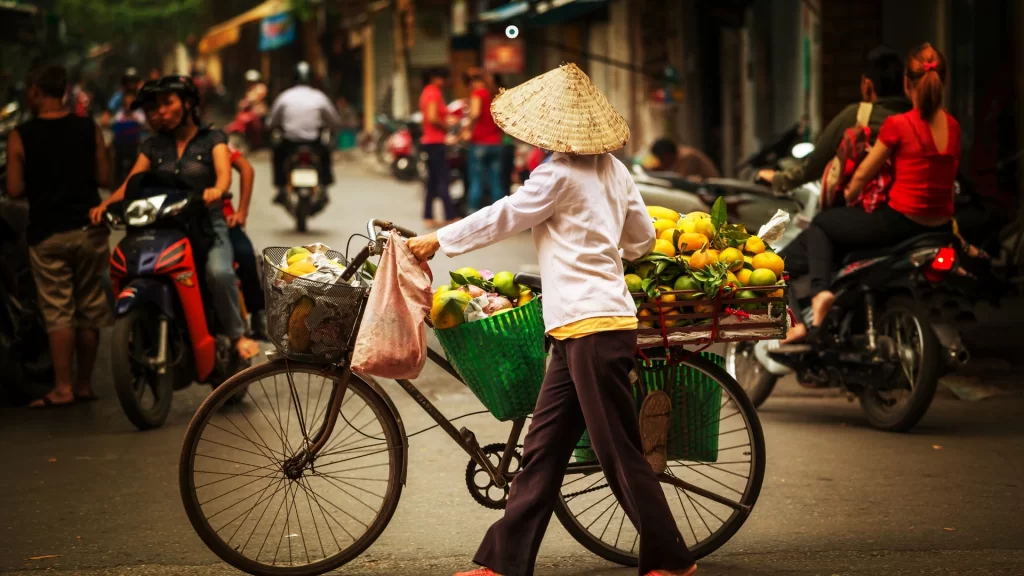
Hanoi’s Old Quarter is a living museum where they forgot to tell the residents to stop living their normal lives for the tourists. The city’s unhurried, layered character rewards slow exploration, with its narrow streets flanked by French colonial buildings, motorbikes weaving past ancient temples, and lakes nestled between busy commercial blocks.
If you’re a traveler looking for an early highlight in your trip, Hanoi has Hoan Kiem Lake, the Temple of Literature and Halong Bay within easy reach of the Old Quarter. Life here moves at a different pace, mornings spent drinking egg coffee in a quiet café, afternoons wandering past crumbling colonial facades. From day one, this city sets a strong tone for travelers who want history and culture to lead the way.
North’s Speeding Heartbeat in Ho Chi Minh City
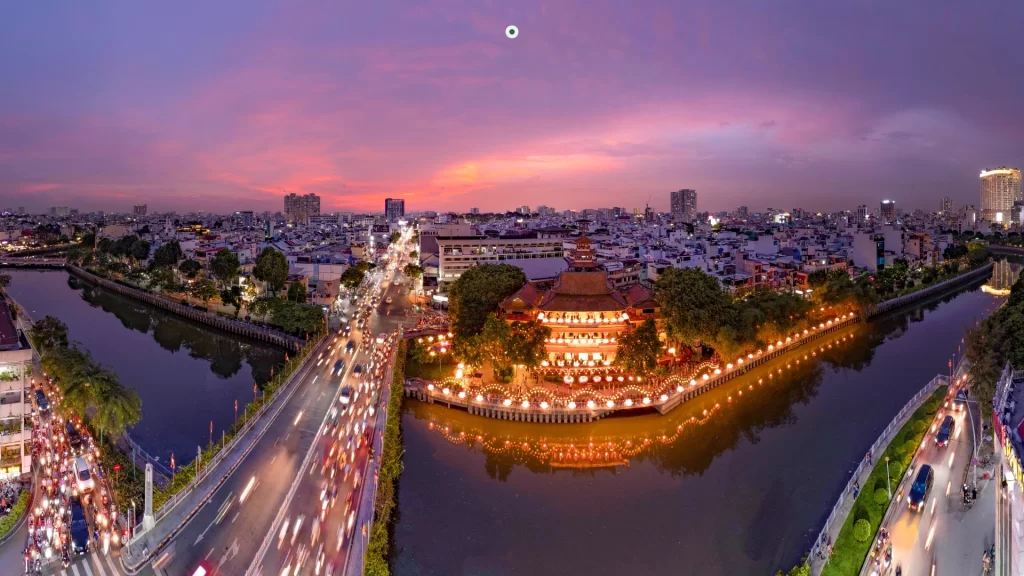
Saigon, Ho Chi Minh City now, trades quiet reflection for constant motion. Skyscrapers loom over war-era landmarks, rooftop bars tower over chaotic traffic below, and the city rarely seems to slow down even late into the nite. The War Remnants Museum offers a sobering counterpoint to the otherwise relentless modern energy surrounding it.
This is the city for travelers who want nightlife, street markets buzzing until midnight, and a jumping-off point that immediately signals a different kind of adventure. It also functions as the natural gateway to the Mekong Delta, making it a smart starting point for anyone planning to explore Vietnam’s southern waterways early in the trip.
Climate and Best Time to Visit Each City
Vietnam’s north-south geography means weather patterns rarely align between the two cities. Hanoi experiences four distinct seasons, with a genuinely cold winter between November and January and a humid, rainy summer from May through August.
The most comfortable window tends to fall between October and December, when skies stay clear and temperatures remain mild.
Ho Chi Minh City sits closer to the equator and sees far less seasonal variation, cycling instead between a dry season from December through April and a wetter season for the remaining months. Travelers chasing predictable sunshine often lean toward visiting the south during its dry stretch, while the north’s autumn window offers arguably the most pleasant conditions anywhere in the country.
Northern vs Southern Vietnamese Cuisine
Food alone can justify picking a starting city. Hanoi is widely regarded as the birthplace of pho, and the northern version tends toward simpler, more subtle broths with fewer herbs and a cleaner overall flavor profile. Bun cha, a smoky grilled pork dish served with noodles and dipping sauce, also originates from this region and remains a genuine highlight for food-focused travelers.
Southern Vietnamese cuisine, centered around Ho Chi Minh City, is sweeter and bolder, with more fresh herbs, chili and coconut milk in the dishes. The city’s street food scene is still buzzing well into the nite and offers a completely different culinary beat to the north, where banh mi reached its most quintessential form.
Which City Works Better as a Gateway to Other Destinations?
Geography plays a bigger role in this decision than most travelers initially consider. Starting in Hanoi puts Halong Bay within easy reach for an early highlight, along with Sapa’s mountain terraces and Ninh Binh’s dramatic limestone scenery, all clustered relatively close to the northern capital.
Beginning instead in Ho Chi Minh City opens up smooth access to the Mekong Delta, Cu Chi Tunnels, and a natural progression north through Hoi An, Hue, and Da Nang before eventually reaching Hanoi. Either direction works well logistically — the real question is which region a traveler wants to experience first versus save for later in the trip.
Cost and Budget Differences of the Two Cities
Generally, Hanoi is a little cheaper on accommodation, street food and local transport which makes it a good base for budget conscious travelers or longer stays. Ho Chi Minh City is still cheap by world standards, but hotel and food prices are often a little higher, especially in the central areas popular with international visitors.
Neither city will break the bank for most travelers, but those on a tighter budget on a longer trip around Vietnam often find that the lower baseline costs in Hanoi add up to meaningful savings, especially during longer stays.
Which City Suits Your Travel Style?
For those visiting for the first time and looking for an easy introduction to the culture, history and a slower pace, Hanoi is the place. If you’re looking for a quick energy boost, the buzz of a modern city and a nightlife-oriented start, then Ho Chi Minh City is the place.
Families with children often find the less frenetic pace of Hanoi and closeness to Halong Bay easier to handle early in a trip, whereas solo travelers and groups looking for social energy often prefer to dive straight into the livelier scene of Ho Chi Minh City.
Hanoi vs Ho Chi Minh City: A Side-by-Side Comparison
| Category | Hanoi | Ho Chi Minh City |
| Vibe | Old-world, cultural, unhurried | Fast-paced, modern, energetic |
| Best For | History lovers, slow travel, first-timers | Nightlife seekers, city energy, urban explorers |
| Climate | Four seasons; cold winters, humid summers | Tropical; dry (Dec–Apr) and wet season |
| Best Time to Visit | October to December | December to April |
| Signature Food | Pho, bun cha | Banh mi, southern-style pho |
| Nearby Highlights | Halong Bay, Sapa, Ninh Binh | Mekong Delta, Cu Chi Tunnels |
| Cost Level | Slightly more affordable | Slightly higher, still budget-friendly |
| Pace of City Life | Slower, contemplative | Constant motion, day and night |
| Ideal Starting Point If… | You want a calm cultural intro first | You want an energetic city plunge first |
How to Decide Based on the Itinerary
For travelers on a north-to-south route that will end up near the Mekong Delta or continue internationally from Ho Chi Minh City, starting in Hanoi makes for a natural story arc – starting with history and calm, and ending with the energy and modern buzz at the close of the trip.
Those flying out of Hanoi instead, or prioritizing an early Halong Bay excursion, often prefer starting south and working north. Turban Adventures builds both route directions into its Vietnam tour packages, tailoring the sequence around flight logistics, available time, and what each traveler wants their first and last impressions of the country to be.
Final Thoughts
Neither Hanoi nor Ho Chi Minh City is the objectively “right” starting point — the better question is which atmosphere should set the tone for the journey ahead. A history-first, slow-burn introduction points toward Hanoi. A high-energy, modern plunge points toward the south. Whichever direction feels right, a well-planned Vietnam itinerary connecting both cities, along with Hoi An, Hue, and Halong Bay, tends to deliver the fullest picture of everything this country has to offer.
Frequently Asked Questions
Both are good choices, but first-time visitors often like to begin in Hanoi. Its slower pace and cultural richness are a good contrast to the faster energy of the south, which many save for later in the trip.
Food, lodging and local transportation tend to cost just a bit less in Hanoi, but both cities are still very inexpensive compared to most international destinations.
The best time for weather in Hanoi is normally October to December October to December offers clear blue skies and mild temperatures after the hot months of summer.
December to April is the dry season, and the best time to explore Ho Chi Minh City and its surroundings for its predictability and comfort.
These are renowned for their street food, but Hanoi is the famous for pho and bun cha, while Ho Chi Minh City is more about bold, a livelier late-night food scene and spicy flavors.
Most itineraries allow 2 or 3 days per city, which is enough time to see the main sights without feeling rushed, but this can be changed to the length of the overall trip.
Hanoi is closer to Halong Bay. So it’s a better place to start the travel, especially if you want to see the bay at the beginning of your trip.
Yes, Ho Chi Minh city is the main gateway to Mekong delta, most day tours and multi-day tours are departing from the city.
It can set the tone and the pace of the trip as a whole, with a start in Hanoi building up to a crescendo of energy by the end, and a start in Ho Chi Minh City leading from energy and vibrancy to a more sedate and contemplative ending.
Yes, most comprehensive Vietnam tour packages do include both cities, and stops in Hoi An, Hue and Halong Bay, so travelers can get the full contrast of the north and south.